Organic production continues to grow in Europe, but it also requires increasing clarity. For many farmers and operators in the sector, complying with the regulations is not always straightforward: controls, certifications, authorised products, labelling, traceability…
For this reason, the Member States of the European Union have agreed on a common position to update the rules on organic production and labelling. For now, this is not a final approval, but the starting point for negotiations with the European Parliament.
The aim is to simplify the application of the rules, reduce administrative burdens and maintain consumer trust in the European organic label.
What the new EU organic regulations aim to achieve
The proposal focuses on making certain rules related to organic production, certification and labelling clearer. It is not about lowering standards, but about making them easier to apply in practice.
This is especially important for farms and businesses that already work with organic production or are considering making the transition. The clearer the regulations are, the easier it becomes to plan crops, choose the right products and comply with the required standards.
Organic production: less bureaucracy, but with guarantees.
One of the key points is to reduce the administrative burden. In the field, bureaucracy can become a real obstacle, especially for small and medium-sized producers.
However, simplifying the process does not mean compromising on rigour. Organic production requires controls, traceability and clear rules to avoid confusion and protect the value of the European organic label.
The challenge lies in finding that balance: making things easier for farmers and operators without weakening market confidence.
Organic labelling and consumer trust.
Organic labelling is not just a visual matter. For consumers, it is a guarantee. For producers, it represents a technical and economic effort. And for the market, it helps distinguish products that genuinely comply with organic production standards.
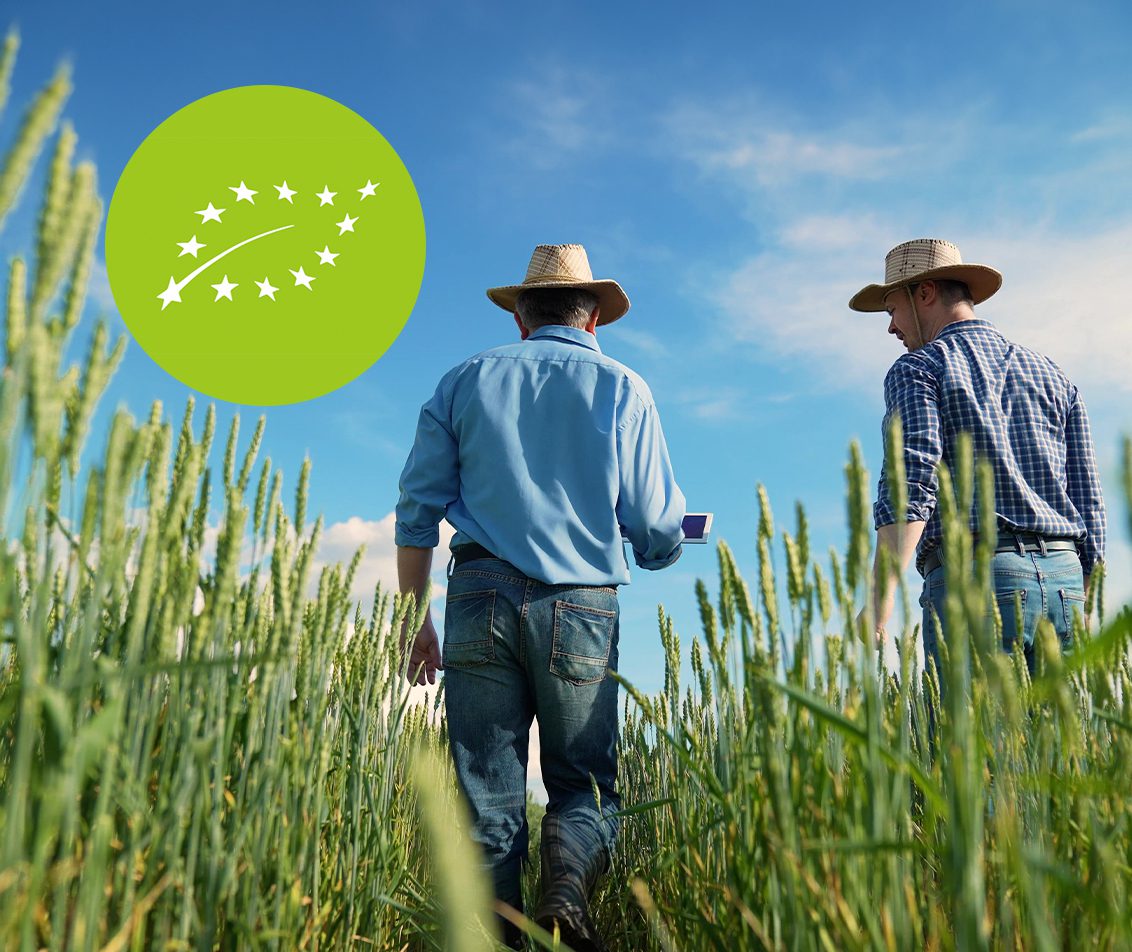
That is why the EU wants to provide greater clarity on the use of terms such as “ecological”, “bio” or “organic”, as well as on the use of the European organic logo.
Esta claridad es importante, porque no todo lo natural es ecológico, y no todo producto orientado a una agricultura más sostenible puede presentarse como ecológico si no cumple los requisitos correspondientes.
The importance of choosing the right agricultural products.
In organic farming, every decision matters. Plant nutrition, soil health, the plant’s natural resilience and prevention are key aspects for achieving balanced and productive crops.
In this context, it is important to clearly distinguish between products of natural origin, solutions aimed at reducing residues, and products suitable for organic production. To be used in organic farming, inputs must comply with the applicable regulations and have certificates issued by accredited bodies.
This nuance is important to avoid confusion. A product may be aligned with more sustainable agriculture or help reduce residues, but that does not necessarily mean it can be used in organic production. Certification and authorisation for use are what make the difference.
Agrométodos works precisely along these lines, developing exclusive solutions for plant nutrition and crop protection away from chemical control and with no residues, recognised for their high scientific and technical value.
In addition, within its portfolio, Agrométodos has a wide range of products certified for use in organic farming, allowing it to support farmers and technical advisors who choose this type of agricultural production.
One more step towards more sustainable agriculture.
The update to European organic regulations aims to support the sector’s growth and make it more manageable for those who produce, certify and market organic products.
We will still have to see what the final text looks like, but the message is clear: Europe wants to strengthen organic production, improve regulatory clarity and protect consumer trust.
For farmers and technical advisors, these types of changes also highlight the importance of reviewing crop strategies, the products used and the real needs of each crop, especially when working under organic production or residue-reduction criteria.
At Agrométodos, we support farmers and technical advisors with solutions adapted to each crop, committed to a more sustainable, profitable and effective agriculture.
FAQs
What has the European Union agreed on regarding organic production?
Member States have agreed on a common position to update European rules on organic production and labelling. The aim is to simplify their application and clarify criteria.
Has the new EU organic regulation already been approved?
No. For now, it is a negotiating position of the Council of the EU. The final text will depend on the negotiations with the European Parliament.
Why is organic labelling important?
Because it helps consumers identify products that meet organic production requirements and protects trust in the European label.
What products can be used in organic farming?
It depends on the current regulations and the applicable authorisations. To be used in organic production, products must meet the established requirements and, where appropriate, have the corresponding certifications.
How can Agrométodos help?
Agrométodos offers solutions for plant nutrition, crop protection and soil improvement. It also has numerous products certified for use in organic farming, along with technical advice adapted to each crop.