The circular economy in agriculture offers a different way of managing resources: making better use of materials, reducing waste and finding new applications for the by-products generated during production.
This approach could be particularly relevant in regions characterised by intensive agriculture, such as south-eastern Spain, where agricultural activity involves significant demands for water, energy and materials.
But to what extent could it help transform these production systems? Researchers are exploring approaches to assess the potential of the circular economy in regions characterised by intensive agriculture, such as south-eastern Spain. The aim is to study possible scenarios for transformation, rather than assume that these changes will necessarily take place.
What does applying the circular economy to agriculture mean?
Traditionally, many production processes follow a linear model: resources are used, products are obtained and materials are generated that, in some cases, are no longer put to use.
The circular economy in agriculture proposes exploring ways to extend the use of these resources and recover some of their value, provided that technically, environmentally and economically viable alternatives exist.
In agriculture, this approach can cover several areas:
- Making use of plant residues and other agricultural by-products.
- Recovering and reusing water where technical and regulatory conditions allow.
- Improving efficiency in the use of nutrients and fertilisers.
- Reducing material losses during production.
- Developing new processes to obtain useful products from resources that were previously discarded.
It is not simply about generating less waste, but about analysing how different agricultural processes are connected and identifying opportunities to use resources more efficiently.
South-eastern Spain as an example of intensive agriculture
South-eastern Spain provides a particularly interesting case for studying, from a theoretical perspective, how applying circular economy principles could influence the development of regions characterised by intensive agriculture.
In areas such as Almería and Murcia, intensive agriculture plays an important role and is characterised by highly specialised production, the use of technology and the need to carefully manage resources such as water and nutrients.
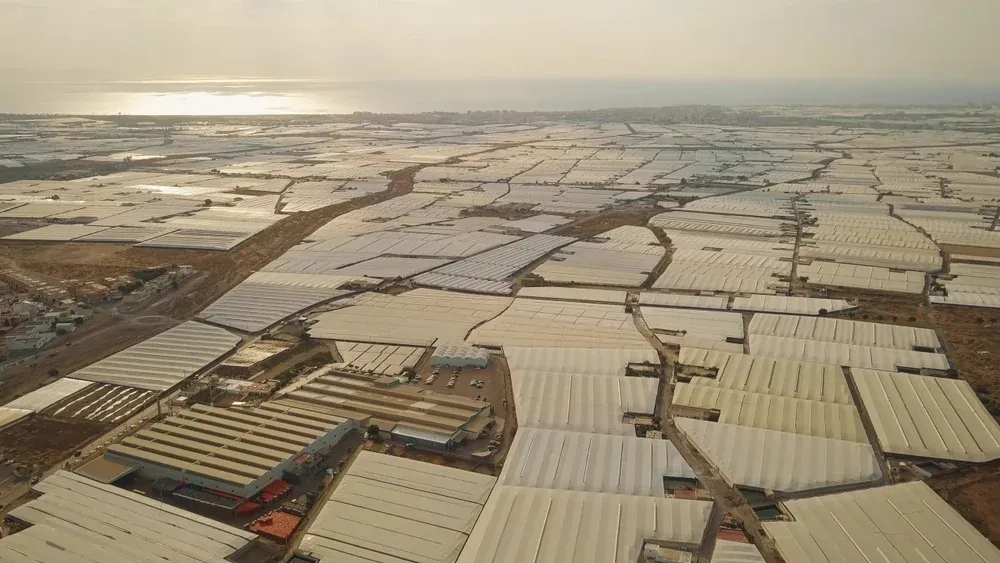
These characteristics could encourage the development of circular strategies, particularly where farms, supporting businesses and processing activities are located close to one another.
For example, certain agricultural by-products could become raw materials for other processes, while improvements in water and nutrient management could help reduce losses.
However, the existence of these opportunities does not mean that their implementation is automatically viable. Each alternative requires an assessment of its cost, environmental impact, treatment requirements and the specific conditions of individual farms.
What potential transformations could the circular economy bring to agriculture?
From this perspective, the transformation of regions characterised by intensive agriculture could be supported by a combination of different strategies, rather than a single technology. Their practical implementation would require an assessment of the feasibility of each alternative and its potential effects on production systems.
Making use of agricultural by-products
Plant residues generated during cultivation activities may offer opportunities to investigate new recovery and valorisation processes.
Depending on their composition and treatment, some materials could be used for composting, the production of organic soil amendments or other applications.
The aim would be to explore ways of recovering some of their value and reducing the amount of material that needs to be managed as waste.
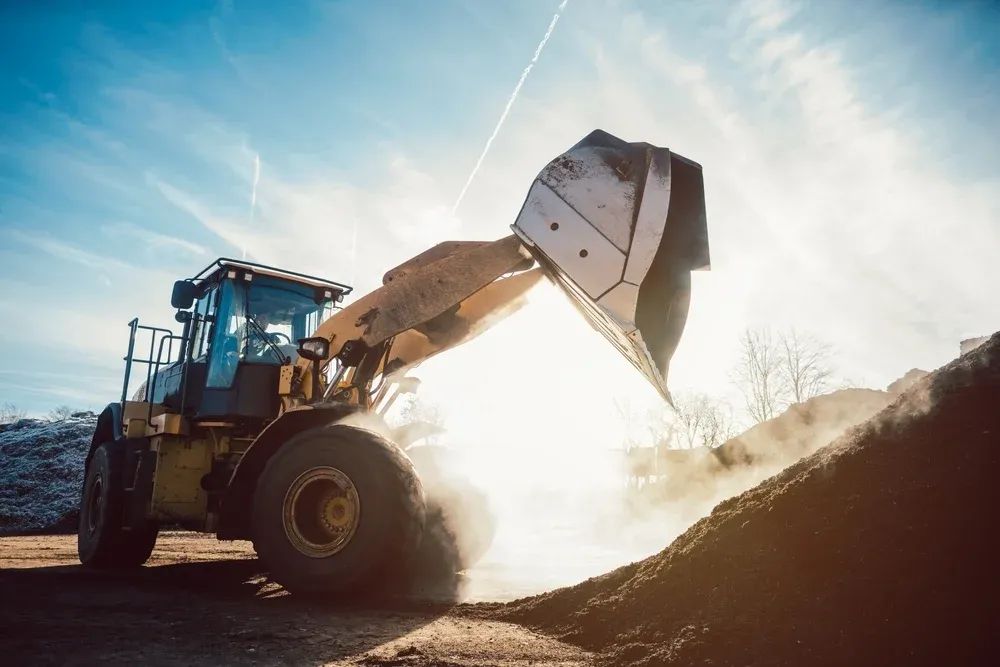
However, any form of reuse must take into account factors such as plant health and safety, the quality of the resulting material and its suitability for the intended purpose.
More efficient use of water and nutrients
Water management is one of the major challenges facing agricultural areas with limited water resources.
From a circular economy perspective, alternatives could be explored to improve water efficiency, reduce losses or incorporate reclaimed water resources where feasible.
A similar situation applies to plant nutrition. Adjusting nutrient applications to crop requirements, improving the monitoring of nutritional status and avoiding unnecessary applications are measures that can contribute to more efficient resource use.
In this area, agronomic expertise is essential to adapt any strategy to actual production conditions.
New opportunities for collaboration and innovation
The circular economy could also drive changes beyond individual farms.
Collaboration between farmers, research centres, technology companies and processing businesses could make it possible to explore new ways of using resources and developing shared processes.
In regions with concentrated agricultural activity, these connections could facilitate innovation projects and create new economic opportunities.
However, their development would depend on factors such as the investment required, the availability of infrastructure, coordination between participants and the existence of genuine demand for the resulting products.
Towards agriculture that makes better use of its resources
The circular economy represents an interesting area of research for analysing how regions characterised by intensive agriculture could evolve, particularly those that need to improve the efficiency of their production systems.
South-eastern Spain provides a suitable context for studying these possible scenarios. However, the opportunities identified should be understood as hypotheses or potential avenues for development, whose feasibility and outcomes will need to be assessed before considering their implementation on a larger scale.
Research, technological innovation and an understanding of the agricultural sector’s needs will be essential to making progress in this direction.
At Agrométodos, we will continue to share information and analysis on emerging areas of research that could contribute to more efficient, sustainable agriculture, better prepared to meet the challenges of the future.